
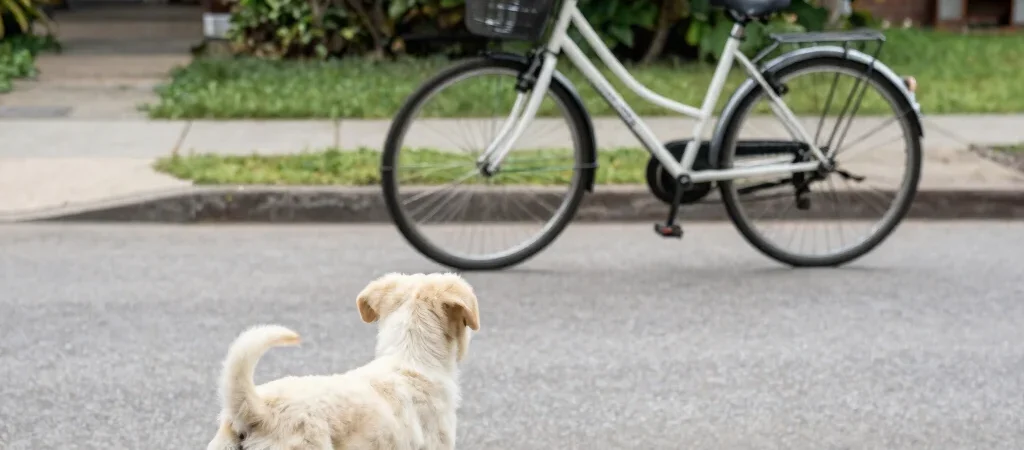
At the edge of a quiet sidewalk, a puppy may watch a passing bicycle without moving toward it. That pause is part of learning, too. Early socialization is not a checklist of things to approach; it is the gradual experience of meeting everyday life with enough support to stay curious.
Small Encounters Leave Room
A calm look at a bus from across the street can be more useful than a close, noisy encounter the puppy cannot leave. Let the puppy observe at a comfortable distance, and notice whether their body softens, their attention shifts, or they choose to investigate. Those details help you decide whether to stay, create more space, or move on.
The same approach applies at home. A visitor who sits quietly and lets the puppy choose whether to come closer gives the puppy more information than hands reaching down right away. Socialization is about building familiarity while preserving a sense of safety.
Watch the Whole Situation
A tucked posture, turning away, or sudden stillness can mean the puppy needs a little more space, but no single signal tells the whole story. Consider what happened just before, what is nearby, and whether the puppy can move away. If they can settle, explore, or return to you, the encounter may be manageable; if not, make it easier.
Let Confidence Take Its Time
Choose one ordinary experience at a time: a different floor surface, a distant sound, or a calm view of people passing. Keep the outing brief enough that the puppy can recover and rest afterward. The practical measure is not how many things they met, but whether they had room to notice, make choices, and feel safe.